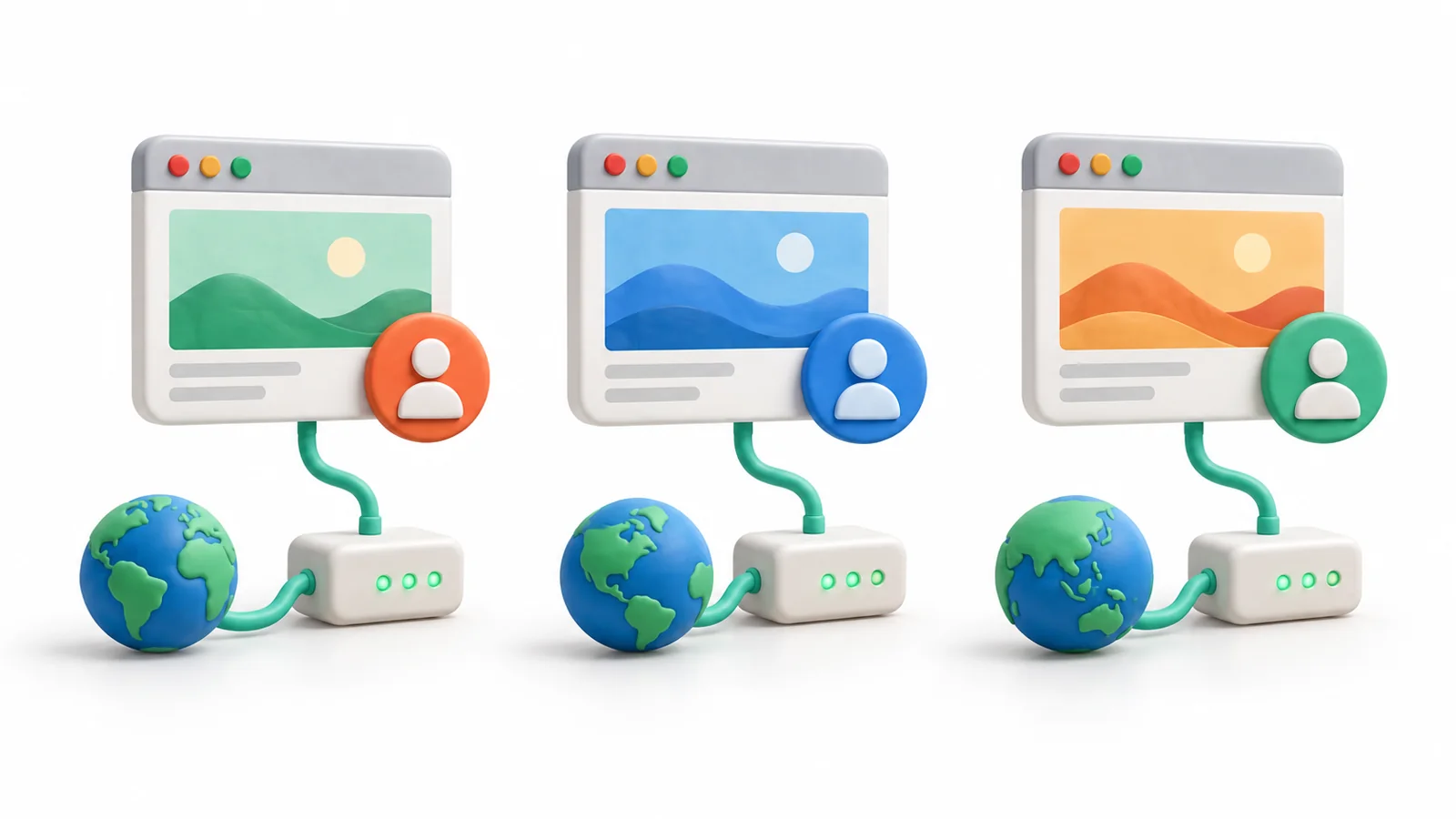

Amazon Scraper API vs Proxy: Choose a Product Data Source
Compare seller APIs, licensed Amazon product data and proxy page checks by record, access scope and reuse rights.
Read guide
Teams building AI agents and large scraping pipelines in 2026 have a different problem than five years ago.

Teams building AI agents and large scraping pipelines in 2026 have a different problem than five years ago.
You are not just “scraping pages” — you are:
Residential proxies solve the network-identity side. The missing piece is choosing web scraping tools that preserve sessions while rotating IPs in a controlled way.
This ranked guide covers the top 5 web scraping tools that pair especially well with residential proxies in 2026, based on:
It’s written for:
If you’re choosing between tools for a Python stack, you may also want our related deep dive: Python web scraping: how to choose tools that pair well with residential proxies.
| Rank | Tool | Best for | Proxy integration style | Main limitation for AI / data workflows |
|---|---|---|---|---|
| 1 | Playwright | Logged-in, browser-heavy, multi-account sessions | Per-browser / per-context proxy config | Heavier than HTTP clients |
| 2 | Crawlee | Large crawl queues with rotating sessions & proxies | Central ProxyConfiguration + SessionPool |
JS-first; Python version still younger |
| 3 | Browser Use | Cloud browser runs for AI agents | Built-in residential proxies & proxy endpoint | Tied to cloud; less low-level control |
| 4 | Scrapy | High-throughput HTTP scraping, pipelines | Downloader middleware + request.meta["proxy"] |
Not ideal for complex browser flows |
| 5 | HTTPX | API-like scraping & authenticated fetches | Client-level proxies, sync + async | No rendering; browser needed for login |
Playwright is the strongest all-around choice when you are running real browsers (Chromium, Firefox, WebKit) with persistent logins, cookies, and one-account-per-context patterns.
Playwright is a browser automation library with first-class support for:
Playwright’s docs emphasize that browser contexts are separate sessions. Each context has its own cookies, storage, and cache — exactly what you need when each account should look like one real person behind a residential IP.
Playwright plus residential proxies is ideal for:
Typical use cases:
Playwright exposes proxy settings at the browser type and browser context level.
At a high level, the pattern looks like this:
Simplified example (TypeScript / JavaScript):
import { chromium } from 'playwright';

(async () => {
  const browser = await chromium.launch();

  // 1 account = 1 context = 1 sticky residential IP
  const context = await browser.newContext({
    proxy: {
      server: 'http://us.proxylane.example:8000',
      username: 'user',
      password: 'pass',
    },
  });

  const page = await context.newPage();
  await page.goto('https://example.com/login');

  // ... login, save storage state, reuse context
})();
With a residential provider that supports timed sticky sessions (for example, Prime Lane sessions from 1 second to 72 hours with a 99.5% success rate and 0.35 s average response time), you can:
For rotation strategies:
Bottom line: if your workflow is browser-native and logged-in, Playwright plus residential proxies is the default first choice in 2026.
Crawlee is a scraping and crawling framework that treats proxies and sessions as first-class infrastructure, not afterthoughts.
Crawlee provides higher-level primitives on top of HTTP requests and browser automation. Its current JavaScript docs (around v3.18) describe:
ProxyConfiguration for centralized proxy routingSessionPool for creating, persisting, rotating, and discarding sessionsInstead of hand-rolling your own proxy rotation logic, Crawlee gives you an opinionated system.
Crawlee with residential proxies is a strong fit for:
Use it when you need:
Crawlee’s ProxyConfiguration routes crawler traffic through your residential pool:
import { CheerioCrawler, ProxyConfiguration } from 'crawlee';

const proxyConfiguration = new ProxyConfiguration({
  proxyUrls: [
    'http://user:pass@us.proxylane.example:8000',
    'http://user:pass@de.proxylane.example:8000',
  ],
});

const crawler = new CheerioCrawler({
  proxyConfiguration,
  useSessionPool: true,
});

await crawler.run(['https://example.com']);
Key advantages for residential proxies:
With a residential provider offering country, region, city, ZIP, ISP, ASN targeting, Crawlee lets you:
If your primary challenge is crawling at scale with smart proxy rotation, Crawlee deserves a top spot in your stack.
Browser Use represents the 2026 trend toward agent-native browser platforms. Its cloud browsers bundle stealth, proxy management, and monitoring around AI agents rather than human operators.
Browser Use provides cloud browser sessions with:
Docs highlight that you can configure residential proxies for agent runs, and plug the same proxy layer into other HTTP tools.
Browser Use with residential proxies is ideal for:
Typical patterns:
Browser Use’s docs describe:
In practice this means:
This lines up well with a provider that offers 28M+ real P2P devices in 195 countries, sticky sessions up to 72 hours, and an emphasis on low-risk IPs (e.g., 98.7% of sampled IPs rated low-risk by Scamalytics).
When your main priority is shipping an agent experience quickly and you’re comfortable with a managed browser layer, Browser Use plus clean residential IPs gives you a fast path.
Scrapy is a battle-tested framework for high-throughput HTTP scraping, with strong support for pipelines, spiders, and middleware.
Scrapy (current docs around v2.20) is a Python-based crawling framework that provides:
Its HttpProxyMiddleware reads proxy settings from request.meta["proxy"] or environment variables, making proxy integration explicit.
Scrapy with residential proxies works well when:
Common Scrapy + residential proxy use cases:
Scrapy’s downloader middleware is the main integration point.
Basic pattern:
HttpProxyMiddlewareproxy in request.meta based on some rotation logicExample:
class ResidentialProxyMiddleware:
    def __init__(self):
        self.proxies = [
            'http://user:pass@us.proxylane.example:8000',
            'http://user:pass@uk.proxylane.example:8000',
        ]

    @classmethod
    def from_crawler(cls, crawler):
        return cls()

    def process_request(self, request, spider):
        proxy = self.choose_proxy()
        request.meta['proxy'] = proxy

    def choose_proxy(self):
        # implement round-robin, sticky rotation, or error-based rotation
        return self.proxies[0]
Rotation strategies with Scrapy + residential proxies:
Scrapy’s middleware gives you enough control to align session persistence with proxy behavior, especially when combined with cookies middleware or custom session handling.
Scrapy remains a core tool for structured HTTP scraping, especially when your main problem is that datacenter IPs are blocked and you need cleaner residential exits.
HTTPX is a modern HTTP client for Python with sync and async APIs, HTTP/1.1 and HTTP/2 support, and built-in proxy support.
HTTPX (current docs around 0.28.1) is a versatile HTTP client that:
Docs explicitly recommend using a Client for real workloads to keep connections, cookies, and settings together.
HTTPX with residential proxies is a strong fit when:
Typical pattern:
HTTPX supports proxies via the proxies argument on Client:
import httpx

proxies = {
    'http://': 'http://user:pass@us.proxylane.example:8000',
    'https://': 'http://user:pass@us.proxylane.example:8000',
}

with httpx.Client(proxies=proxies) as client:
    r = client.get('https://example.com/api/data')
    print(r.status_code, r.text[:200])
For rotation strategies:
Client per sticky residential IP if you want 1:1 identity mappingHTTPX Clients make it easy to pair connection reuse, cookie jars, and a single residential IP. This is particularly valuable where session persistence matters more than IP churn.
HTTPX shines as the fetch layer in a split workflow: browser for login and navigation, HTTPX + residential proxies for scaled data retrieval.
There isn’t one “best residential proxy tool” — the right choice depends on your workflow and where the expensive work happens.
Use Playwright for the browser layer:
Add HTTPX when you can switch from rendered pages to API-like endpoints.
Favor Crawlee if you’re JS/TS-first, or Scrapy if you’re Python-first:
SessionPool (Crawlee) or middleware (Scrapy) handle proxy rotationConsider Browser Use for a cloud-native agent experience:
Supplement with HTTPX or Scrapy if you need deeper control of bulk fetching.
Combine tools:
Using a provider focused on authentication-grade IP quality (clean residential devices, verified cities, and session control) is often cheaper per finished task than chasing the lowest $/GB.
When you’re ready to test with real workflows, you can plug any of these tools into a proxy layer like proxylane.dev, which exposes HTTP(S) and SOCKS5 residential, mobile, and static home IPs without requiring an SDK.
A tool pairs well with residential proxies when it:
If a tool only lets you set one global proxy, it’s harder to run multiple identities safely.
No. Use a full browser when you need:
Once you’re authenticated and have stable cookies or tokens, you can often switch to:
This split significantly reduces cost and complexity while still leveraging residential proxies for identity.
Good patterns in 2026:
Over-rotation (“every request, new IP”) often increases bans on authenticated sites.
They are better for some sites, especially those that:
Mobile proxies are often more expensive per GB, so teams typically:
A pragmatic starter stack:
As you grow, add Crawlee or Scrapy for large-scale crawls, and consider managed platforms like Browser Use when you want more agent-native features without managing browsers yourself.
 ProxyLaneTraffic never expires
Scale your workflows with the tools you already use. Rotating or sticky sessions up to 72 hours.
Compare seller APIs, licensed Amazon product data and proxy page checks by record, access scope and reuse rights.
Read guideChoose the right anti-detect browser proxy guide, map the shared verification steps, and keep account access separate from the network route.
Read guidePython BeautifulSoup scraping still starts with requests + bs4, but durable, logged‑in workflows now live or die on the proxy layer. This guide shows how to…
Read guide