
Amazon Scraper API vs Proxy: Choose a Product Data Source
Distinguish authorized Amazon APIs, licensed product data and proxy-based page checks by record quality and access rights.
Read guide
Who should pick ProxyLane vs Bright Data?
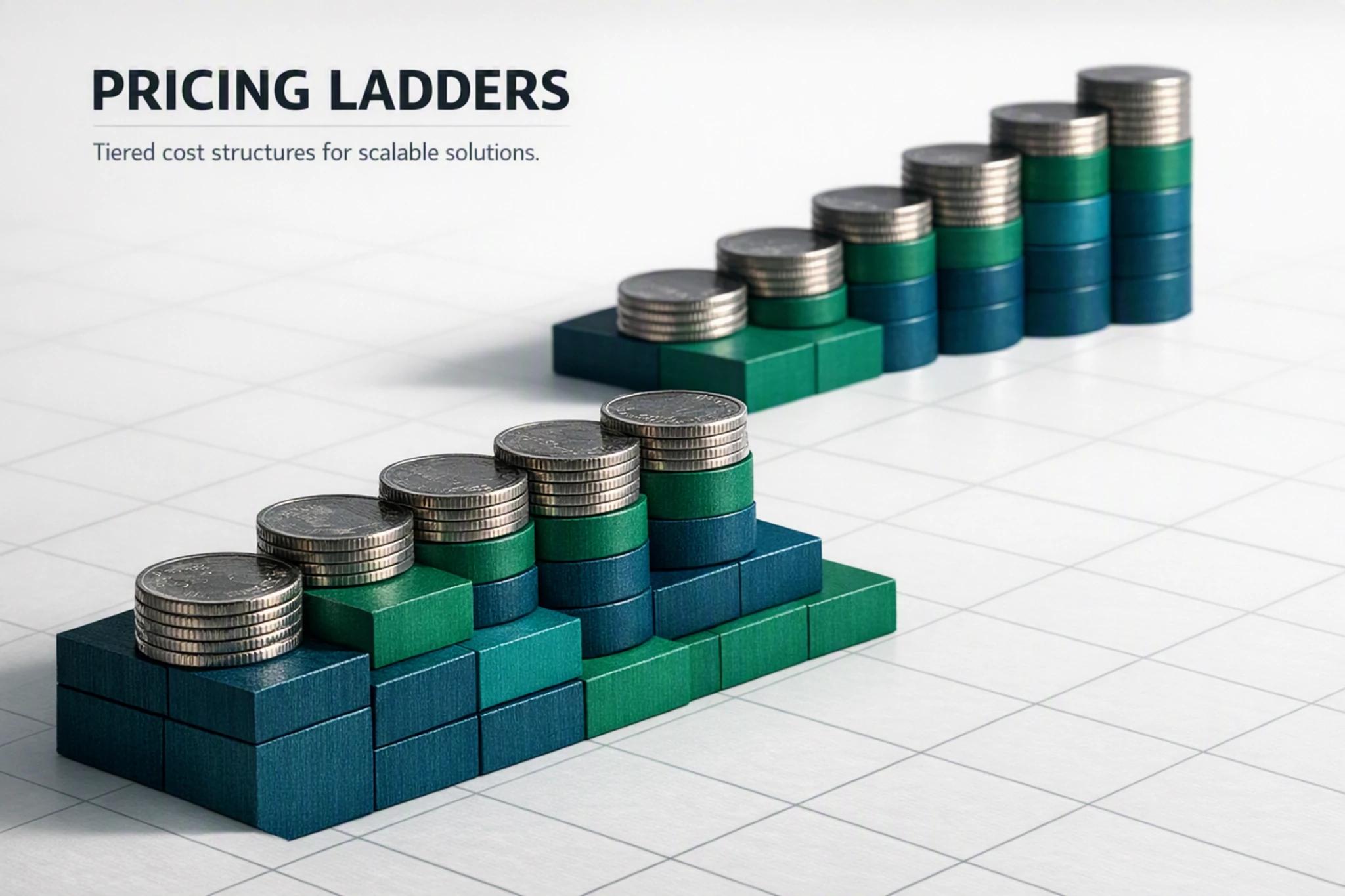
Who should pick ProxyLane vs Bright Data?
Choose ProxyLane if you run bursty, irregular, or experiment-heavy workloads and care about non-expiring GBs, cost per successful result, and developer-first integration.
Choose Bright Data if you need a large, multi-product proxy and scraping platform with strong public success-rate claims, managed tools, and a single vendor for many data needs.
This guide compares ProxyLane vs Bright Data costs across four practical criteria:
Pricing structure
Bandwidth value per GB
Success-rate signals and output quality
Suitability for different data workloads
A comparison table is included so teams can see when ProxyLane’s non-expiring GBs and cost-per-success focus beat Bright Data’s broader product portfolio. We also name other residential proxy providers for specific scenarios.
Before picking a residential proxy provider, most data teams should answer four questions:
How predictable are our workloads?
Regular, high-volume crawls vs irregular batches and experiments.
Do we optimize for raw GB cost or cost per successful request?
Headline price per GB vs validated records, retries, and error handling.
How much platform breadth do we need?
Pure proxies vs managed unblocking, scraper APIs, mobile/ISP pools.
How strict are our geo/session and ethical sourcing requirements?
City/ISP targeting, session control, and evidence of responsible residential sourcing.
We’ll use these questions to compare ProxyLane and Bright Data across:
Pricing structure
Bandwidth value per GB
Success-rate evidence and measurement
Workload fit and product breadth
Then we’ll close with clear recommendations per use case.
Both ProxyLane and Bright Data sell residential traffic by the gigabyte, but the way you pay – and whether unused traffic expires – is different.
ProxyLane offers premium residential proxies with a simple, batch-friendly structure:
Residential-only bandwidth
From $2.50/GB at larger volumes
1 GB package from $6.50
Unused traffic never expires
Non-expiring GBs are the core differentiator. You can:
Buy bandwidth for a specific project or experiment
Use what you need now
Keep leftover GBs for future batches without worrying about deadlines
This aligns well with teams that:
Run tests, pilots, and irregular crawls
Need budget predictability across quarters
Want to tie proxy spend to validated outputs, not monthly burn
Bright Data’s residential offering is part of a broader proxy platform. Its pricing ladder focuses on monthly volume:
Residential pay-as-you-go: about $4/GB
Monthly tiers:
~$3.50/GB at 141 GB
~$3.00/GB at 332 GB
~$2.50/GB at 798 GB
Traffic is tied to ongoing monthly plans, not non-expiring balances
Bright Data also sells:
Mobile, datacenter, and ISP proxies
Web Unlocker and Web Scraper API
These additional products have separate pricing models, often success-based for managed extraction.
ProxyLane is optimized for carryover bandwidth and batch economics.
Bright Data is optimized for teams that commit to regular monthly volumes and want a structured enterprise ladder.
For a deeper look at how to model real costs, including retries and failed requests, see this related guide: residential proxy pricing per GB: how to model your real data costs.
Pricing structure is one thing; effective bandwidth value is another.
Key numbers from public materials as of September 2026:
ProxyLane
1 GB: $6.50 (entry package)
Larger volumes: down to $2.50/GB
Traffic never expires
Bright Data (residential)
Pay-as-you-go: ~$4/GB
Monthly tiers:
141 GB: $3.50/GB
332 GB: $3.00/GB
798 GB: $2.50/GB
At headline rates:
ProxyLane’s best public rate of $2.50/GB matches Bright Data’s lowest tier.
ProxyLane is ~37.5% cheaper than Bright Data’s $4/GB pay-as-you-go when you can buy at its best rate.
Where ProxyLane’s bandwidth value stands out is time:
With non-expiring traffic, leftover GBs become a reusable asset.
With expiring or monthly traffic, unused bandwidth becomes sunk cost.
For teams that:
Crawl weekly for a year
Run enrichment experiments sporadically
Add new regions only when product launches
ProxyLane’s model can preserve value across projects instead of forcing overspend to stay in a volume tier.
Bright Data’s model can be better if:
You know you’ll use hundreds of GBs every month
You want to lock in a high-volume tier with a single enterprise vendor
Pricing per GB only matters if you know what you get for that GB.
ProxyLane does not publish a single global success-rate number (e.g., “99.95%”). Instead, its content urges buyers to measure:
Target response quality (HTTP status, rendered content)
Session continuity and behavior
Retries, transferred bytes, and recovery
Cost per useful, validated result
Practically, this encourages teams to:
Run small pilots before scaling
Check geo accuracy (country, city, ISP) per target
Track cost per enriched record or scraped product, not just cost per GB
This is a cost-per-success approach, aligned with:
AI retrieval
Company enrichment
Ecommerce intelligence
People sourcing
Where each validated record matters more than the sheer volume of traffic.
Bright Data publishes explicit success metrics:
Residential proxies: 99.95% success rate, ~0.7s response time
Web Unlocker (managed unblocking): 98% success rate, pay only for success
Web Scraper API: “only pay for what’s successfully delivered”
This gives buyers a clear, quantitative KPI:
Ability to advertise near-99–100% success
Success-based billing for managed API products
At a high level:
ProxyLane: You model success yourself by measuring validated outputs and failure handling.
Bright Data: You rely on published success KPIs and, for some products, success-based billing.
Teams that need to report “we bought provider X because its proxies are validated at 99.95% success” may find Bright Data’s public KPIs more compelling.
Teams that prefer provider-agnostic workflows, rigorous internal measurement, and a focus on cost per successful data row may align better with ProxyLane’s philosophy.
Both providers support fine-grained targeting and session control:
ProxyLane
50M+ residential IPs
Country, city, ISP targeting
Rotating or sticky sessions
HTTP and SOCKS5
Works with Playwright, Python, cURL, n8n, and more (no proprietary SDK)
Bright Data
400M+ IPs across 195 countries
Country, state, city, ZIP, ASN targeting
Sticky and rotating sessions
HTTP, HTTP/3/QUIC, SOCKS5
Bright Data clearly wins on:
Pool size (400M+ vs 50M+)
Targeting granularity (ZIP, ASN, more fine-grained options)
ProxyLane covers the key operational needs:
Reliable country/city/ISP combinations
Clear choice between rotating vs sticky sessions
ProxyLane is focused on premium residential proxies:
Single product type
Emphasis on non-expiring traffic
Educational ecosystem:
Buying guides and sourcing checklists
Use-case walkthroughs for AI retrieval and enrichment
Open-source "skills" teaching AI agents how to set up residential proxies in Python, cURL, etc.
Bright Data is a broad data collection platform:
Residential, mobile, datacenter, ISP proxies
Web Unlocker
Web Scraper API
Other data tools for large-scale enterprise scraping
Proxyway’s review describes Bright Data as a “default option” and “jack of all trades,” but notes that prices and terms may not fit everyone, and more specialized providers can win in certain scenarios.
Putting it all together:
ProxyLane
Bursty scraping and enrichment
AI retrieval pipelines needing stable sessions and geo control
Localized testing and pricing checks by city/ISP
Teams that want to buy GBs per project and reuse leftovers later
Bright Data
Large-scale, continuous web data operations
Enterprise teams needing one vendor for proxies plus managed unblocking/scraping APIs
Workloads where success-based API billing and 400M+ pool size are central requirements
Here’s a concise table comparing ProxyLane vs Bright Data costs and capabilities.
ProxyLane and Bright Data pricing at a glance: compare per-GB costs, traffic expiry policies, pool size, targeting controls, and success-rate claims to see which provider matches your workload shape.
| Criterion | ProxyLane | Bright Data | Interpretation | |---|---|---|---| | Pricing structure | Residential-only; traffic never expires; from $2.50/GB, 1 GB at $6.50. | Residential pay-go at $4/GB, monthly tiers down to $2.50/GB at ~798 GB; traffic tied to ongoing plans. | ProxyLane is ideal for batch and irregular workloads; Bright Data suits steady, high-volume usage. | | Headline bandwidth value | Best public rate $2.50/GB; entry package $6.50 for 1 GB, non-expiring. | Best public rate $2.50/GB, but only at 798 GB/month; pay-go $4/GB. | At similar best rates, economics depend on traffic expiry and usage pattern. | | Success-rate evidence | No global % claim; emphasizes measuring response quality, session continuity, retries, and cost per useful result. | Residential proxies claim 99.95% success and ~0.7s response time; managed APIs advertise 98%+ success and success-based billing. | Bright Data offers strong public KPIs; ProxyLane pushes internal cost-per-success measurement. | | Pool size | 50M+ residential IPs. | 400M+ residential IPs in 195 countries. | Bright Data wins on sheer volume; ProxyLane focuses on verifiable, stable sessions. | | Geo targeting | Country, city, ISP targeting. | Country, state, city, ZIP, ASN targeting. | Bright Data offers finer granularity; ProxyLane covers core local-web needs. | | Session control | Clear choice between rotating and sticky sessions. | Sticky and rotating, plus advanced configs. | Both support key patterns; ProxyLane foregrounds session strategy in its docs. | | Protocols & tooling | HTTP, SOCKS5, no SDK required; integrates with Playwright, Python, cURL, n8n. | HTTP, HTTP/3/QUIC, SOCKS5, SDKs and APIs for multiple languages. | ProxyLane is developer-first and provider-agnostic; Bright Data offers a broader managed stack. | | Product breadth | Focused on residential proxies plus educational content and open-source skills. | Full platform: residential, mobile, datacenter, ISP, Web Unlocker, Web Scraper API. | ProxyLane is a specialist; Bright Data is a jack-of-all-trades. | | Best-fit workloads | Bursty jobs, AI retrieval, enrichment, localized tests, irregular runs. | Enterprise-scale, continuous scraping, managed unblocking, multi-proxy-type operations. | Workload shape and governance expectations should drive the choice. |
ProxyLane and Bright Data aren’t the only options. Market research in 2026 highlights several other best residential proxy providers:
IPRoyal
64M+ IPs, 195+ countries
99.4% success rate, ~0.5s response time
Never-expiring traffic, similar to ProxyLane’s non-expiring model
Oxylabs
175M+ residential IPs
99.95% success rate, 0.6s response time
Residential plans from $6/GB (5 GB) down to $2.50/GB (1 TB)
ISP proxies with unlimited-duration sessions and 99.9% success
SOAX
155M+ IPs, 195 countries
99.95% success rate, 0.55s response time
These alternatives show how segmented the market has become:
Some prioritize non-expiring bandwidth (IPRoyal, ProxyLane)
Others focus on large pools and near-perfect success (Bright Data, Oxylabs, SOAX)
Teams should benchmark providers on:
Geo accuracy and pool stability
Real success rate in their own workloads
Cost per successful record, not just headline price per GB
Imperva’s 2025 Bad Bot Report notes that automated traffic surpassed human traffic in 2024 (51% of web traffic) and malicious bots accounted for 37%. In this environment, your choice of residential proxy provider materially affects:
Block rates
CAPTCHA frequency
Compliance posture
Instead of declaring a single winner, here’s how to pick between ProxyLane vs Bright Data based on workload.
Pick ProxyLane when:
You run campaigns, one-off audits, pilots, or seasonal price checks.
You need city or ISP targeting, but don’t consume hundreds of GB every month.
You want non-expiring traffic, so unused bandwidth funds your next batch.
ProxyLane’s non-expiring GBs and focus on cost per successful result make it easy to:
Run small experiments
Capture validated outputs
Roll remaining gigabytes into future workflows
Pick Bright Data when:
You manage high-volume, continuous crawls across many domains.
You want one vendor for proxies, Web Unlocker, and Web Scraper API.
You need to cite public success-rate metrics (99.95%, 98%) in internal reviews.
Bright Data’s:
400M+ IP pool
Fine-grained geo/ASN targeting
Managed unblocking tools
make it a strong default for enterprise teams with complex, always-on data needs.
Lean toward ProxyLane if:
You use residential proxies inside AI agents for retrieval or enrichment.
You want open-source skills that teach agents to configure proxies via Python or cURL.
You care about provider-agnostic integration and measuring cost per useful answer.
ProxyLane’s educational ecosystem and focus on developer-first integration reduce friction when you embed proxies into LLM-powered tools.
If you need:
Mobile proxies
ISP proxies with unlimited-duration sessions
Datacenter pools alongside residential
Then Bright Data, Oxylabs, or other multi-product platforms may be a better fit than a residential-only provider.
Both ProxyLane and Bright Data discuss ethical sourcing, but with different emphasis:
ProxyLane heavily stresses informed participation and withdrawal controls in residential networks.
Bright Data highlights compliance and governance across its broader platform.
For regulated industries, it’s worth asking each provider detailed questions about:
Residential IP sourcing and consent
Abuse handling and withdrawal processes
Regional compliance and data protection
At headline rates, both can reach $2.50/GB for residential traffic. The difference is in how you get there:
ProxyLane offers $2.50/GB with non-expiring traffic, plus smaller packages like 1 GB at $6.50.
Bright Data reaches $2.50/GB only at ~798 GB/month; pay-as-you-go is around $4/GB.
For irregular or lower-volume workloads, ProxyLane’s non-expiring GBs usually deliver better effective value.
With non-expiring GBs (ProxyLane, IPRoyal):
You can buy a larger package once, then consume it across multiple projects.
There’s no pressure to burn bandwidth just to keep a volume discount.
With expiring or monthly traffic (many enterprise platforms):
Any unused GBs become waste at the end of the period.
You may overbuy to hit a cheaper tier, then scramble to use it.
Non-expiring GBs make it easier to align proxy costs with actual project work instead of calendar cycles.
You should care about cost per successful request or record, which is a combination of:
Success rate
Retry behavior and error handling
Price per GB
A provider with a slightly higher per-GB price but a higher real success rate can be cheaper per validated record. ProxyLane explicitly encourages measuring this internally; Bright Data provides strong public success KPIs that you can compare in your own benchmarks.
Bright Data is a better fit when:
You need a full platform (residential, mobile, datacenter, ISP, Web Unlocker, Web Scraper API).
You run continuous, high-volume scraping and want enterprise support.
You rely on success-based managed APIs that handle blocks and CAPTCHAs for you.
ProxyLane is more compelling when you want specialized residential proxies, non-expiring GBs, and developer-first, provider-agnostic workflows.
Beyond ProxyLane and Bright Data, serious buyers often evaluate:
IPRoyal for never-expiring traffic and a 64M+ IP pool.
Oxylabs for 175M+ IPs, 99.95% success, and strong ISP proxy options.
SOAX for 155M+ IPs with high success rates and broad geo coverage.
The right choice depends on your geo needs, session patterns, budget, and whether you prioritize non-expiring bandwidth, platform breadth, or near-perfect success rates.
Residential proxies are now critical infrastructure for AI, growth, and research teams. Whether you choose ProxyLane or Bright Data, anchor the decision to your workload shape and cost-per-success metrics, not just headline price per GB.
By testing providers against your own targets and tracking validated outputs per dollar, you’ll build data pipelines that are not only fast and reliable, but economically sound.
Distinguish authorized Amazon APIs, licensed product data and proxy-based page checks by record quality and access rights.
Read guideConnect a buyer-owned proxy to an Apify Actor, keep the session boundary clear, and validate records instead of counting requests.
Read guideSeparate Australian egress from en-AU content, AUD pricing, GST display, postcode validation and the state delivery context.
Read guide