
Amazon Scraper API vs Proxy: Choose a Product Data Source
Compare seller APIs, licensed Amazon product data and proxy page checks by record, access scope and reuse rights.
Read guide
IP rotation is the practice of changing the outgoing IP address used for web requests—either per request (request-level rotation) or per session (via sticky…
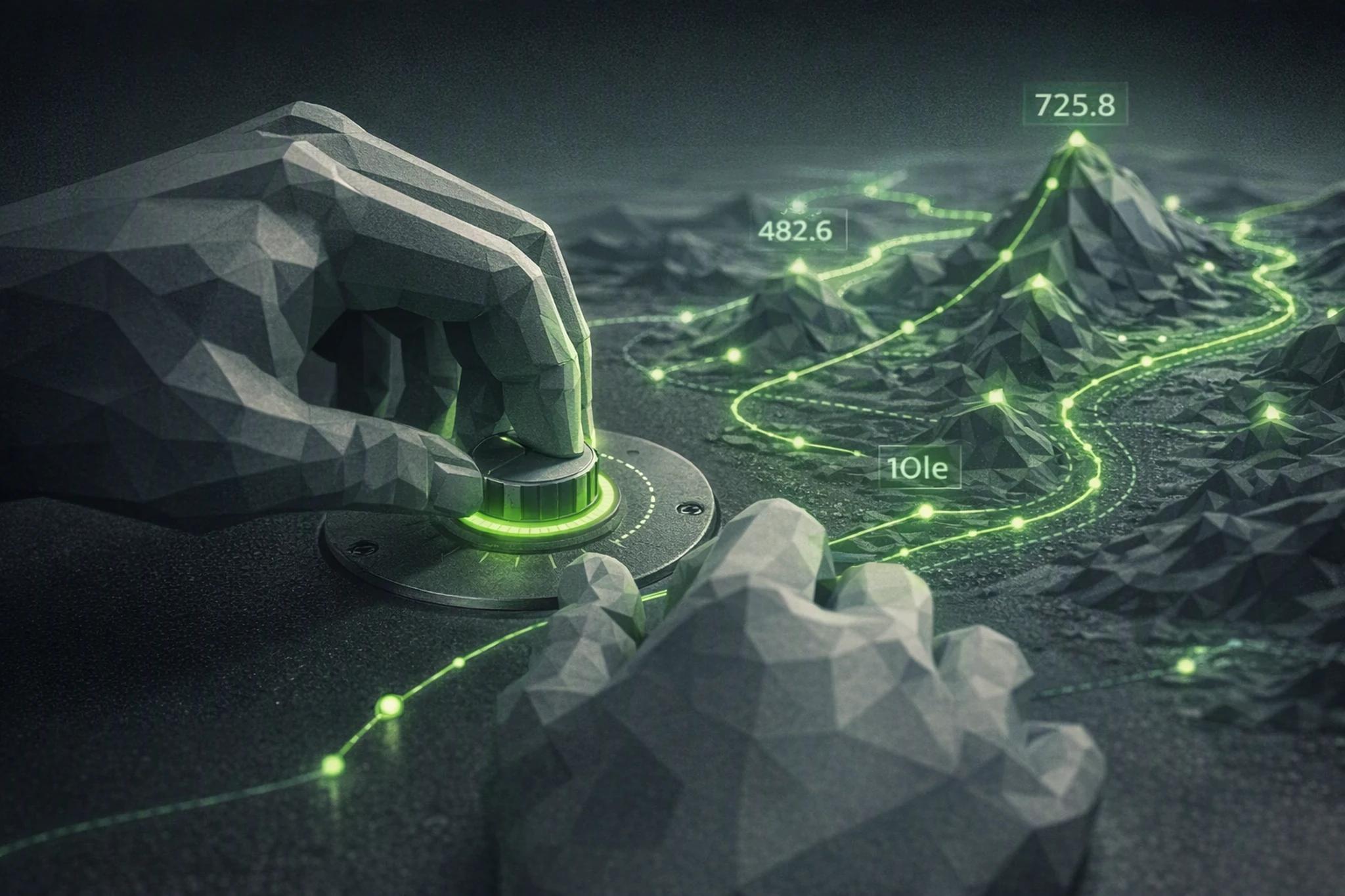
IP rotation is the practice of changing the outgoing IP address used for web requests—either per request (request-level rotation) or per session (via sticky sessions, not to be confused with dedicated IPs)—to reduce bans, rate limits, and biased responses in workflows like IP rotation for web scraping and ecommerce price monitoring.
At a technical level, IP rotation works by routing your traffic through a proxy pool and changing which individual proxy address is used over time.
Instead of your scraper, AI agent, or browser automation hitting a site from a single static IP, each request or session exits through a different residential IP.
In residential proxy networks, there are two primary modes of IP rotation:
Request-level rotation assigns a fresh IP for each request (or small batch of requests).
When your script calls the proxy gateway, the provider’s infrastructure chooses an IP from the pool that matches your targeting (country, city, ISP, etc.).
The next request goes back through the gateway and is routed to a different IP, even if it’s hitting the same target page.
This pattern is ideal when:
Session-level rotation keeps the same IP for multiple related requests over a defined window.
Instead of rotating every request, you get a “sticky” IP for the duration of a session token or timeout (for example, up to 72 hours in many residential networks).
Within that session:
This is the mode you’d use when:
In practice, robust proxy providers let you choose between request-level rotation and sticky sessions per workflow.
That choice is fundamental for designing reliable data pipelines.
Modern websites treat large volumes of repeated, structured traffic as potential bot behavior.
Imperva’s 2025 Bad Bot Report estimates that automated traffic surpassed human traffic in 2024, accounting for 51% of all web traffic, and malicious bots made up 37% of internet traffic.
Against that backdrop, un-rotated scraping looks increasingly abnormal.
For web scraping, IP rotation serves three practical goals:
AI retrieval pipelines—LLM tools, monitoring agents, or browser automation—face similar challenges.
Cloudflare’s 2025 review reports its network handles 81 million HTTP requests per second on average, peaking at 129 million per second, with AI-related bot traffic now a visible chunk of that.
As AI agents increasingly fetch and interpret live web data, they need IP rotation as part of their “web access” stack to avoid being misclassified as abusive bots.
For these CPSR-focused teams (measuring cost per successful result instead of cost per GB), IP rotation is not a nice-to-have performance tweak.
It is core reliability infrastructure.
Most proxy pricing pages talk about cost per GB.
But for data teams, engineers, and AI practitioners, the meaningful metric is cost per successful result—CPSR.
Each time a request gets:
you pay for bandwidth without receiving a usable datapoint.
IP rotation directly influences CPSR by improving the success rate of requests.
In residential proxy pools, especially premium ones, you can:
The result is a higher share of validated responses per unit of traffic.
That is why guides such as ProxyLane’s main pillar on rotating residential proxies: how IP rotation reduces bans and boosts CPSR emphasize session choices and success-rate measurement more than raw pool size.
IP rotation lives among several overlapping concepts.
Clarifying these helps you design correct pipelines:
You can technically achieve IP rotation with static lists and custom logic.
But in practice, most teams use rotating residential proxy gateways.
Both are forms of IP rotation at the pool level.
The choice is whether you rotate at the granularity of requests or at the granularity of sessions.
Rotation per request mimics many visitors.
Rotation per session mimics one consistent visitor.
Teams sometimes assume rotation implies dedications, but those are separate procurement questions.
You can have rotating access to a dedicated subset of pool IPs.
Or you can rotate through a shared pool, which is more common for residential traffic.
Consider a data team that wants to monitor ecommerce prices across major retailers.
They care about genuine, localized prices—what a human shopper in a given region truly sees—not synthetic bot pages.
They also care about CPSR: minimizing wasted calls that get blocked or mis-routed.
Here’s how an IP rotation workflow might look in a ProxyLane-style pipeline for ecommerce price monitoring:
Define the product set and target conditions.
Configure residential geo and ISP targeting.
Use request-level rotation for anonymous product fetches.
Use sticky sessions for logged-in or cart flows.
Measure CPSR and adjust rotation policy.
Optimize bandwidth usage over time.
In this design, IP rotation is not a cosmetic feature.
It is the mechanism that keeps the pipeline delivering realistic prices, at a sustainable CPSR, without overwhelming any single IP or tripping retailer defenses.
A practical implementation would use a premium residential provider with clear controls over request-level rotation, sticky session duration, country/city/ISP selection, and usage economics; a ProxyLane residential proxies pricing features review provides one concrete reference point for those capabilities.
For ProxyLane’s audience—engineers, data scientists, AI product managers—the question isn’t just “what is IP rotation?”
It’s “how do I make my next request work, at a predictable cost?”
IP rotation sits alongside:
Together, these form a “web access layer” that AI agents, scrapers, and monitoring pipelines rely on.
When that layer is designed around verifiable responses and ethical residential sourcing, teams can treat premium residential proxies as reliable infrastructure rather than a risky shortcut.
To explore concrete configuration examples and try a workflow where traffic never expires, rotating and sticky residential proxies are accessible via standard HTTP/SOCKS5 clients at proxylane.dev.
 ProxyLaneTraffic never expires
Scale your workflows with the tools you already use. Rotating or sticky sessions up to 72 hours.
Compare seller APIs, licensed Amazon product data and proxy page checks by record, access scope and reuse rights.
Read guideChoose the right anti-detect browser proxy guide, map the shared verification steps, and keep account access separate from the network route.
Read guideOur picks for market research: ProxyLane for small, intermittent projects, plus options for regional tracking, monthly collection and managed extraction.
Read guide