
Amazon Scraper API vs Proxy: Choose a Product Data Source
Distinguish authorized Amazon APIs, licensed product data and proxy-based page checks by record quality and access rights.
Read guide
A practical shortlist of eight residential proxy providers, with current public pricing, session controls, targeting, trade-offs, and a matched test plan.
The best residential proxy is the one that fits the job you can validate. A regional price check may need city targeting and a stable session. A broad public-data crawl may care more about rotating traffic, predictable billing, and a route your existing client can use. A monthly price per GB says little until you know how much traffic a valid record consumes.
Published by ProxyLane; our service appears first. Comparison uses public product terms, not a head-to-head benchmark. Prices and product terms below were checked on September 18, 2026. Provider claims about pool size, success rate, response time, uptime, or sourcing remain provider claims; screenshots illustrate the public offers and are not test evidence.
| Provider | Public price context | Buyer model | Targeting and session shape | Best fit to investigate |
|---|---|---|---|---|
| ProxyLane | 100 MB trial $1.95; 1 GB $6.50; 1 TB $2,500 ($2.50/GB) | Package traffic with no expiry | Country, city, ISP; HTTP/SOCKS5; rotating or sticky | Existing client that needs a clear traffic package |
| Bright Data | PAYG displayed at $8/GB, with a displayed 50% coupon price of $4/GB | PAYG or monthly commitment | Country, state, city, ZIP; rotating residential; SOCKS5 via Proxy Manager | Teams needing a broad commercial network and compliance process |
| Oxylabs | 5 GB for $30 ($6/GB) to 1 TB for $2,500 ($2.50/GB), monthly | Monthly allowance with top-ups | Geo targeting; sticky and flexible rotation; HTTP(S), HTTP3, SOCKS5 | Buyers who want a documented self-service tier ladder |
| Decodo | PAYG $4/GB; monthly 3 GB for $11.25 and 100 GB for $275 ($2.75/GB) | PAYG or monthly subscription | Country through ZIP/ASN; rotating or sticky; HTTP(S)/SOCKS5 | One-off or recurring collection with a short trial option |
| IPRoyal | PAYG 1 GB $7.35/GB; subscription 1 GB $7/GB | PAYG or subscription | Country, state, city; rotation and sticky sessions | Irregular jobs where stored traffic terms matter |
| SOAX | Builder $200/month + VAT; Enterprise $3,000/month + VAT | Monthly credits across proxy types; country-tier rates | Country, region, city, ISP; higher plans add ASN/ZIP | Teams that want one credit plan across network types |
| DataImpulse | 5 GB for $5; 1 TB for $800 ($0.80/GB) | Pay as you go, no subscription | Country included; finer targeting varies by SKU; rotating or sticky | Traffic-sensitive projects with non-expiring balance |
| Webshare | 1 GB $3.50/month; 3,000 GB $4,200/month ($1.40/GB), displayed promotion | Monthly rotating-residential GB | Country, city, state, ZIP, ASN; HTTP/SOCKS5 | Buyers comparing a low entry tier with large monthly volume |
Prices are entry or displayed tiers, not a prediction of your cost per accepted result. Taxes, coupons, minimums, renewal, fair use, and target restrictions can change the payable amount. Keep raw residential traffic separate from a provider’s managed API or browser product when comparing quotes.
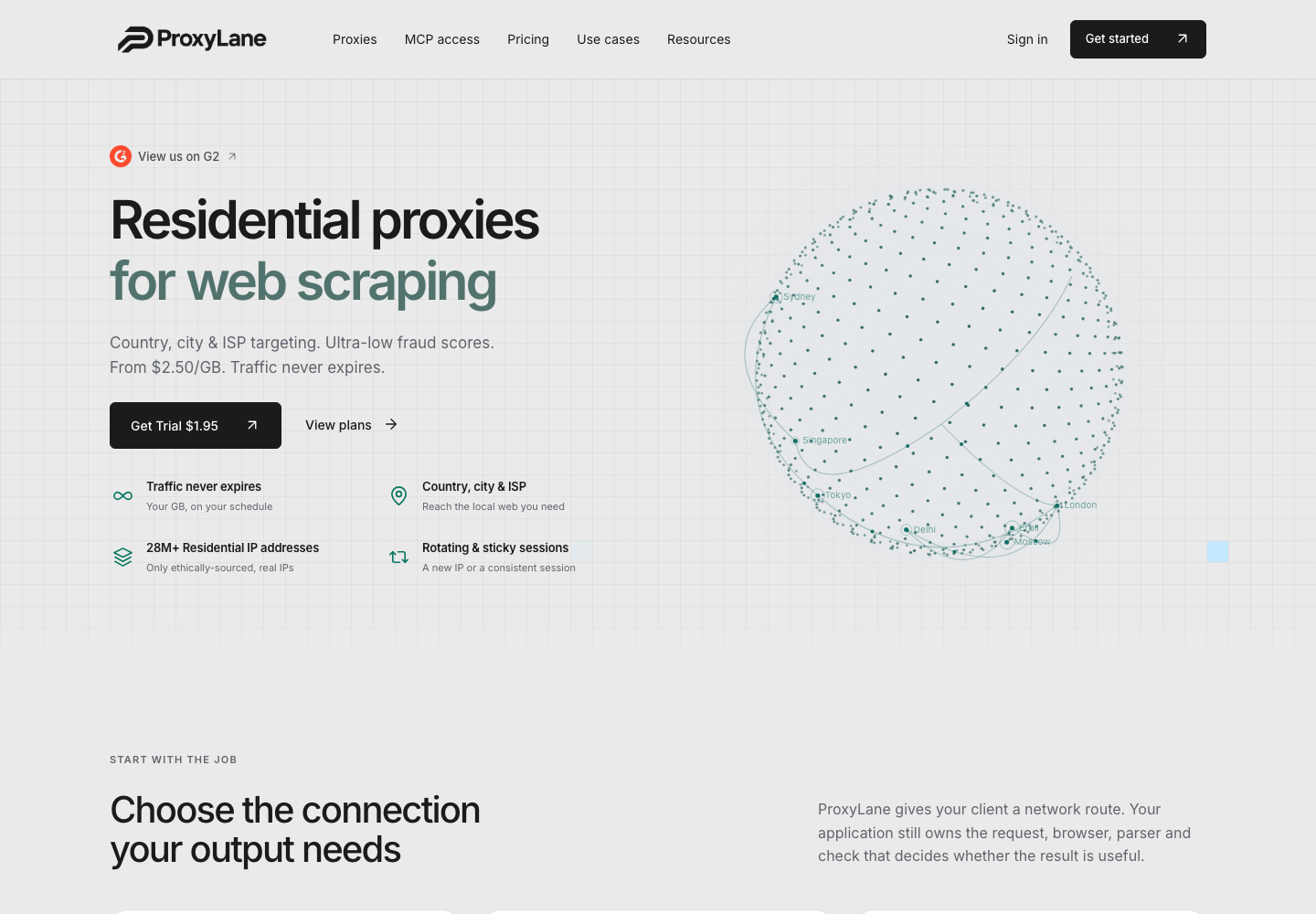
ProxyLane offers a 100 MB trial package for $1.95. Standard traffic packages start at 1 GB for $6.50 and run to 1 TB for $2,500. The 1 TB tier is 1,000 GB, giving the displayed floor of $2.50/GB. In the package register, that relationship is written as 1 TB = 1,000 GB. Packages shown on the pricing page have no expiry, so an intermittent workload does not have to finish inside a monthly window. Confirm the current package and service terms for your account before purchase.
The product is designed to feed the HTTP client, browser, or automation workflow you already operate. The public offer lists country, city, and ISP targeting, HTTP and SOCKS5, plus rotating and sticky sessions.
Strengths:
Trade-off: traffic is purchased separately from free account registration. Complete onboarding and validate the target and geography before committing to a larger package.
Choose ProxyLane when you have an existing client, a defined target and a preference for package traffic that can remain available between runs. Sign up and choose your workflow and traffic package during onboarding.
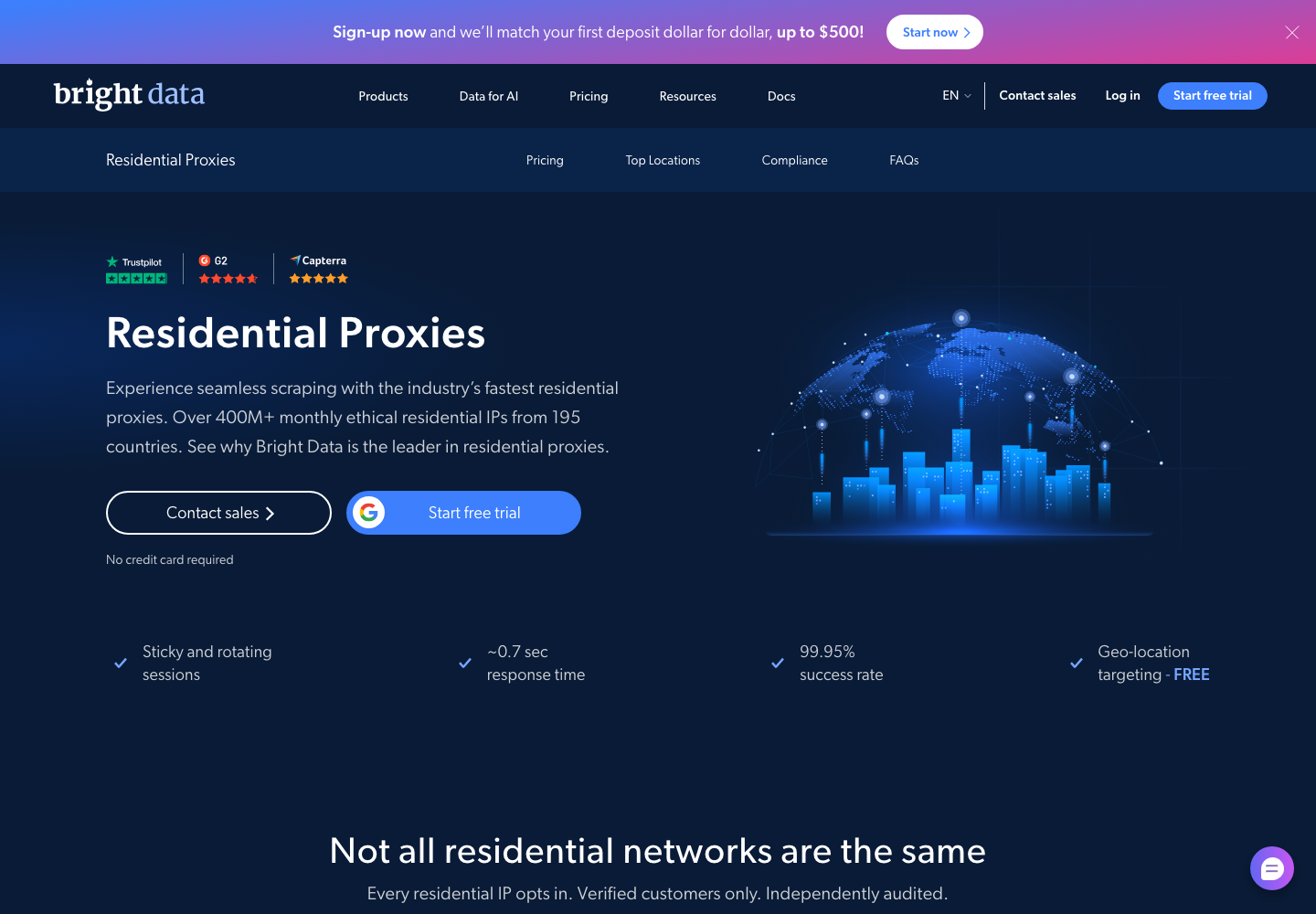
Bright Data’s residential pricing page displays pay as you go at $8/GB and a 50% coupon price of $4/GB, labelled with no commitment. It also shows monthly plans such as 141 GB for $499, 332 GB for $999, and 798 GB for $1,999. Treat those promotions and monthly minimums as checkout terms to verify, not as a universal rate.
The same page describes rotating residential access, country/state/city/ZIP targeting, and a compliance process before using the residential network. SOCKS5 is presented through Bright Data’s Proxy Manager, so confirm that integration when comparing a raw client setup.
Strengths:
Trade-off: the monthly options have meaningful commitments, and a displayed coupon price may not be the price available to your account or target.
Choose Bright Data when network breadth and a formal compliance step are part of procurement. Ask for the exact zone, recharge behavior, minimum commitment, and allowed target before comparing its quote with a smaller PAYG route.
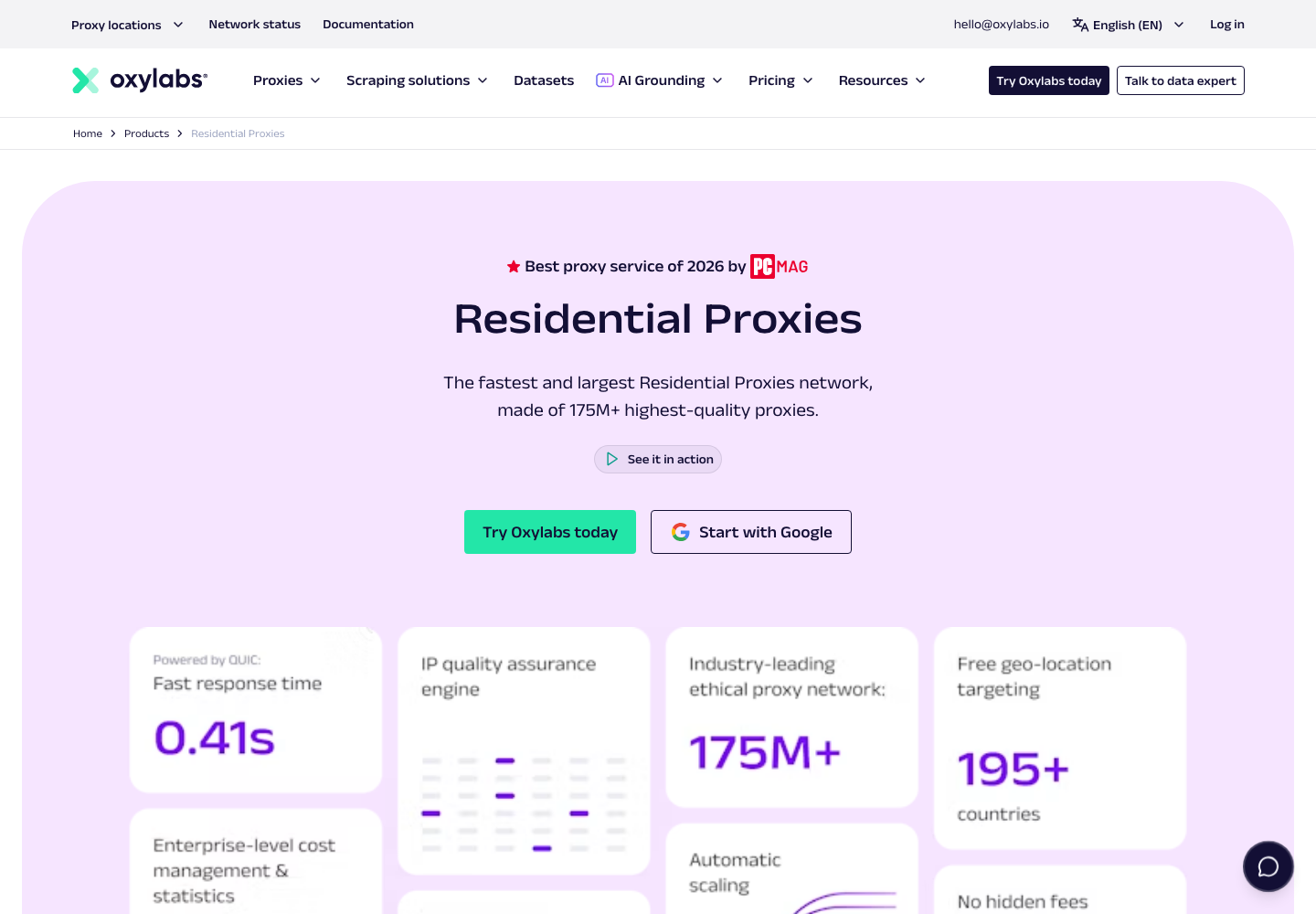
Oxylabs publishes a clear monthly ladder on its residential pricing page: Starter is 5 GB for $30, Basic is 20 GB for $100, Advanced is 125 GB for $500, and Corporate is 1 TB for $2,500. The displayed per-GB rates therefore run from $6 to $2.50, with VAT potentially added. Top-up limits and the monthly billing period remain part of the decision.
The page lists HTTP(S), HTTP3, and SOCKS5, sticky sessions, flexible rotation, and free geo-targeting, with country, city, state, and ZIP targeting.
Strengths:
Trade-off: even the Starter tier is a monthly 5 GB commitment, so a very small or irregular job may pay for more allowance than its first test needs.
Choose Oxylabs when you want a self-service tier with documented protocol and targeting choices and can justify a monthly allowance. Include VAT, top-up behavior, and the provider’s target restrictions in your cost sheet.
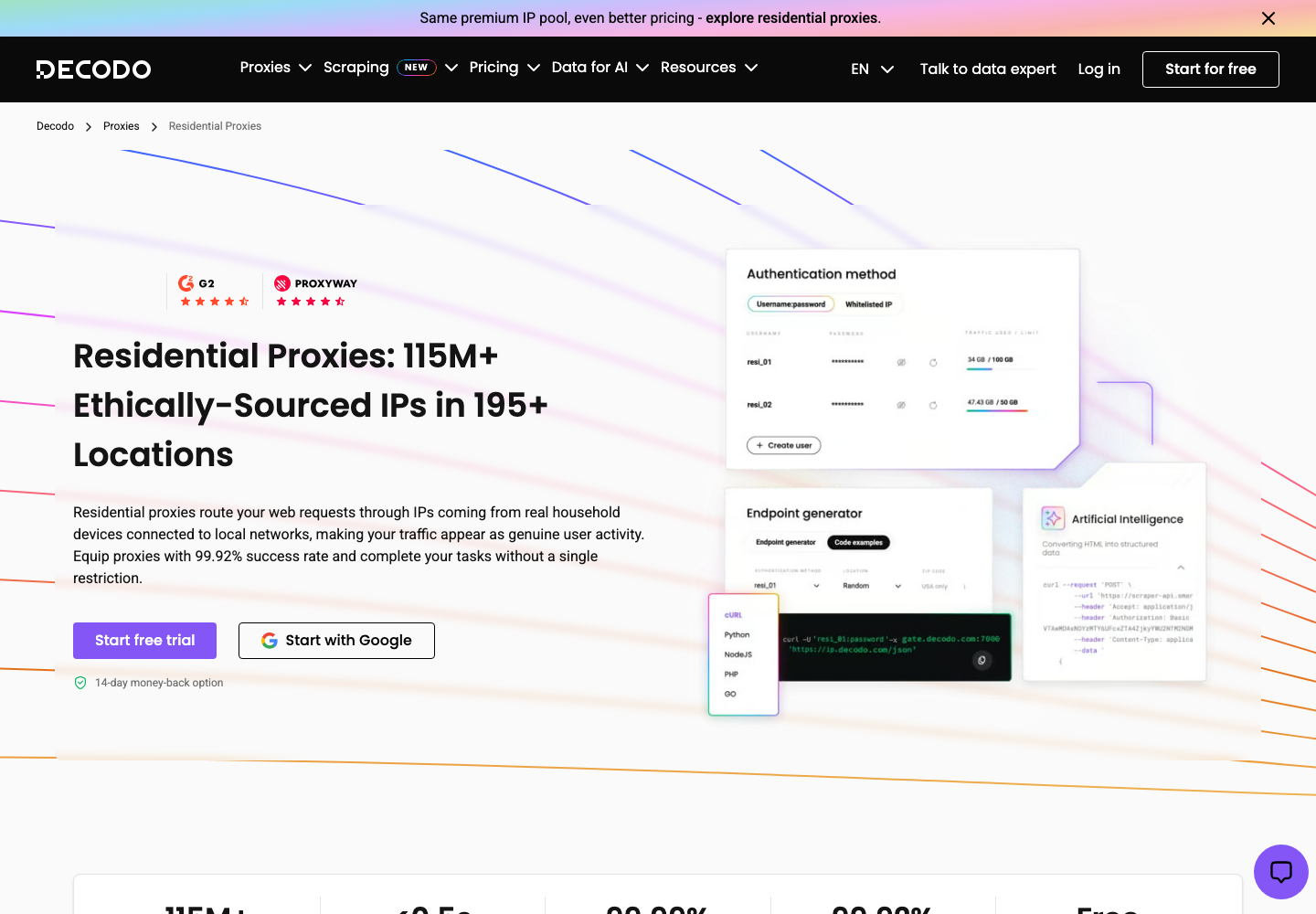
Decodo’s pricing page lists monthly plans from 3 GB at $3.75/GB to 100 GB at $2.75/GB, plus a $4/GB pay-as-you-go option. The displayed monthly tiers include 3 GB for $11.25, 10 GB for $35, 25 GB for $81.25, 50 GB for $150, and 100 GB for $275. Monthly totals are displayed before VAT. Its FAQ describes a 3-day trial with 100 MB for new users and automatic activation of the selected plan after the trial unless cancelled in time; read the current dashboard terms before using a trial as a procurement test.
The product page lists HTTP(S) and SOCKS5, rotating and sticky sessions, and targeting at continent, country, state, city, ZIP, and ASN level. Decodo also documents a dashboard with usage and spending statistics.
Strengths:
Trade-off: the trial has a short window and automatic post-trial activation language, so set a cancellation reminder and do not confuse a small trial with a volume benchmark.
Choose Decodo when you need precise targeting or a quick integration check before selecting a recurring tier. Record the trial’s bytes, valid records, and failure categories before deciding whether a monthly plan fits.
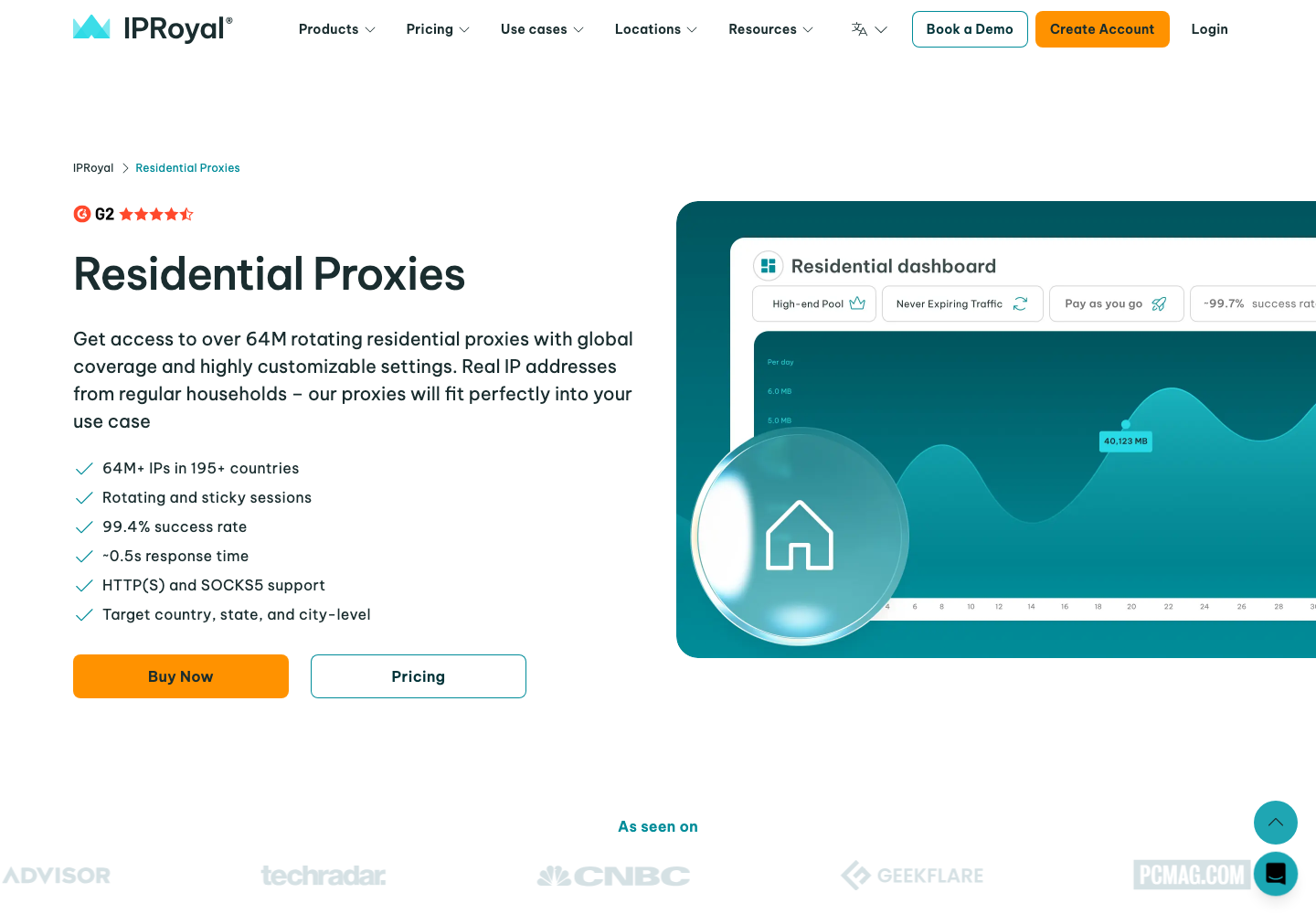
IPRoyal’s residential pricing shows subscription pricing at $7/GB for 1 GB, $5.95/GB for 2 GB, and $5.25/GB for 10 GB. Pay as you go is displayed at $7.35/GB, $6.25/GB, and $5.51/GB for those same sizes, with custom pricing at $1.84/GB from 10 TB. Subscription custom rates start at $1.75/GB from 10 TB. The page describes traffic as non-expiring, subject to account terms.
The residential product page lists country, state, and city targeting, HTTP(S) and SOCKS5, rotating and sticky sessions, and a sticky session duration of up to 7 days.
Strengths:
Trade-off: the lowest advertised $1.75/GB rate requires a 10 TB custom volume, far beyond a small validation run.
Choose IPRoyal when a job runs in bursts and stored traffic terms matter. Compare the exact account-activity, renewal, and expiry language with your expected idle period before buying a larger balance.
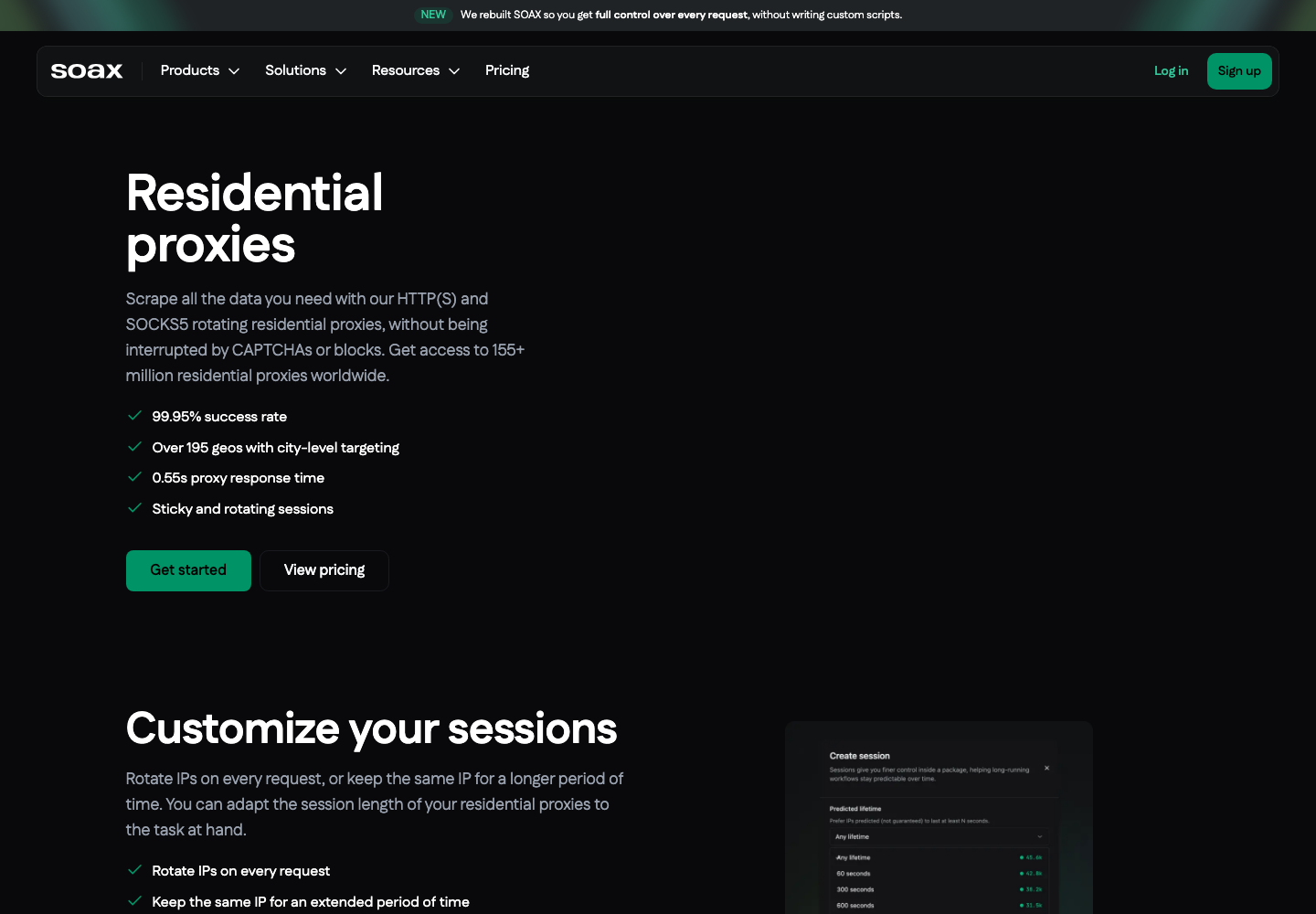
SOAX’s pricing page uses credits: Builder costs $200/month + VAT for 200 credits, Team $500, Scale $1,500, and Enterprise $3,000. One credit equals $1. Sandbox has no subscription fee but includes no credits; “Free” does not mean free residential bandwidth.
Residential and mobile traffic share country-tier rates. For example, Builder lists Tier 1 usage at $3/GB, while other country tiers cost less. A budget therefore needs a country mix as well as a traffic estimate.
Strengths:
Trade-off: the subscription amount is a credit commitment, not a fixed global GB allowance. Check the selected country's rate and the plan's support hours.
Choose SOAX when you need residential and mobile access under one budget and can forecast the geography mix.
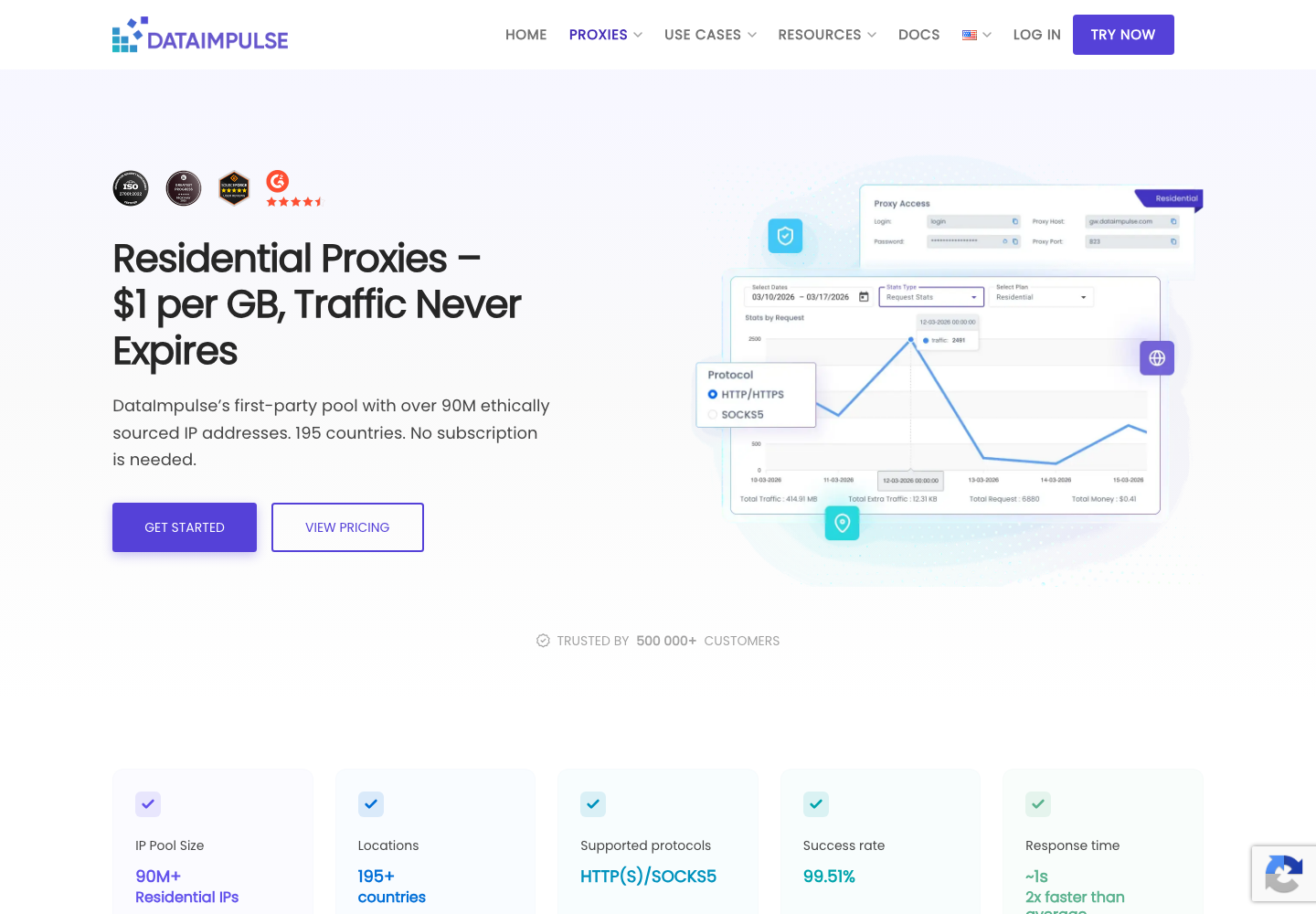
DataImpulse’s residential page presents pay-as-you-go traffic with a 5 GB introductory package for $5, 50 GB for $50, and 1 TB for $800 ($0.80/GB). The page says traffic never expires and no subscription is needed. Its published entry price is attractive for a traffic-led comparison, but a lower GB rate does not automatically mean a lower cost per valid result.
The public offer lists HTTP(S)/SOCKS5, country targeting, rotating and sticky sessions, API access, and 24/7 support. DataImpulse’s location page distinguishes included country targeting from finer state, city, ASN, or ZIP targeting.
Strengths:
Trade-off: targeting precision is product-dependent, so country coverage alone may not satisfy a city, ASN, or ZIP requirement.
Choose DataImpulse when traffic may be consumed over an uneven schedule and country-level routing is enough for the first test. Price a matched sample after recording retries, bytes, and accepted records.
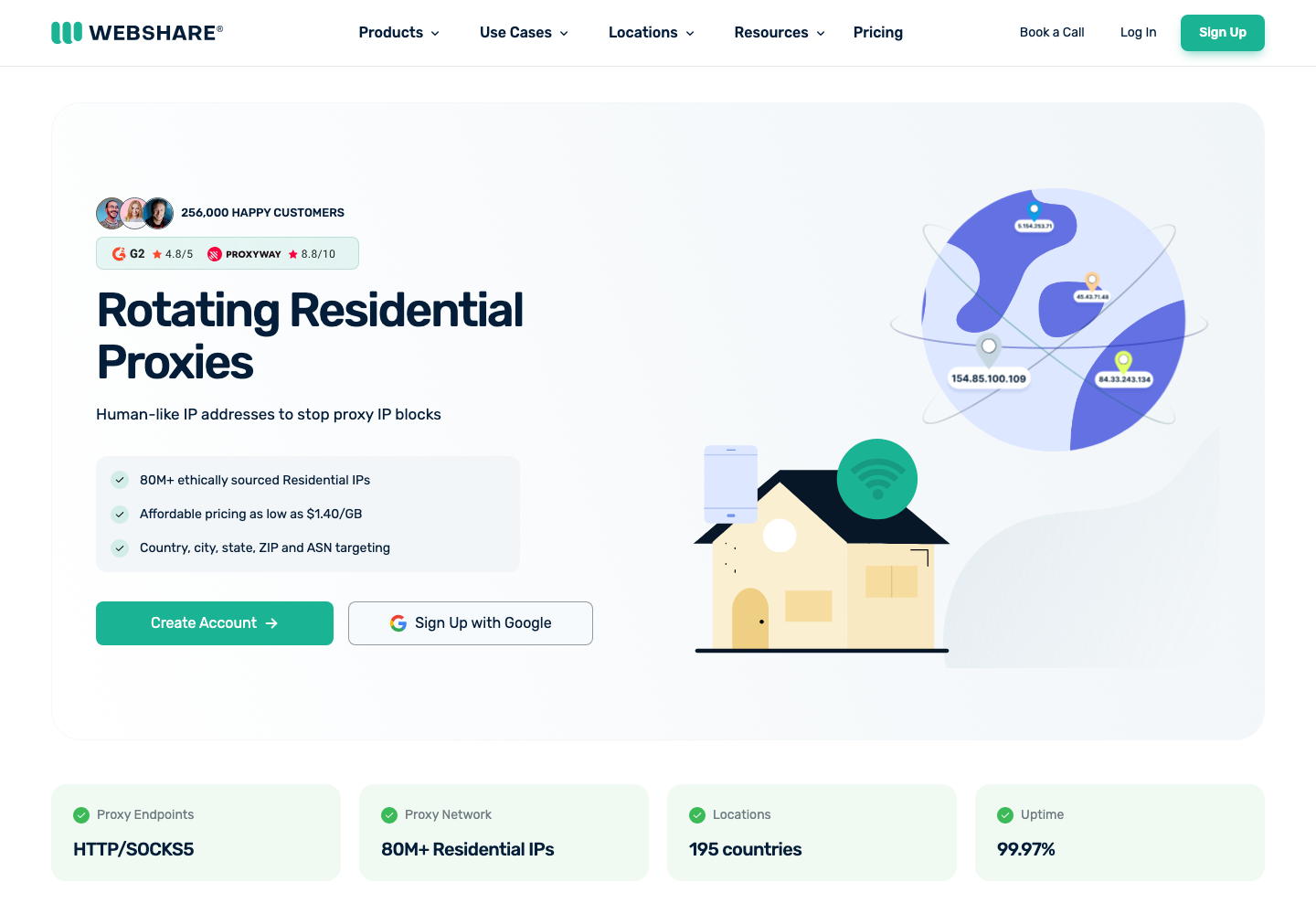
Webshare’s rotating residential page displays monthly plans from 1 GB at $3.50/GB to 3,000 GB at $1.40/GB. That largest displayed tier means $4,200 per month; 10 GB costs $27.50 and 100 GB costs $225. The page shows promotional savings against a $7/GB reference and monthly billing. Verify the current renewal and fair-use terms in checkout.
Webshare lists HTTP/SOCKS5 support and filtering by country, city, state, ZIP, or ASN. Its help center separates rotating residential from static residential. The free offer of 10 proxies with no card is a separate product.
Strengths:
Trade-off: promotional monthly pricing and the fair-use policy need to be read with the selected plan, and the free proxy offer is not a residential trial.
Choose Webshare when a monthly rotating-residential plan is the right product shape and you want to compare a small entry tier with volume pricing. Use the same target and acceptance rule on the paid residential route.
Start with the result your workflow must accept: a product and currency, a localized page, a permitted ad placement, or a record with a required identifier. Then compare each shortlist candidate on these fields:
Use the same permitted pages, client, headers, parser, geography, session policy, pacing, timeout, retry limit, and acceptance validator for each candidate. Record the provider meter, transferred bytes, status, final location, observed exit, session changes, accepted records, and failure category. Stop when the agreed budget or failure rule is reached. Keep raw proxy tests separate from managed extraction or browser products. The residential buying guide covers contract questions, while the cost-per-successful-request method defines the accepted-record denominator.
Run a small reference request without changing the parser. Treat an HTTP 200 response containing a challenge, login page, wrong currency, or missing identifier as a failed record. Treat HTTP 407 as an authentication failure to diagnose before judging the target. After the run, compare cost per accepted record and the work needed to recover failures. That result is useful for your workload; it does not establish a universal provider ranking.
There is no universal winner in this shortlist. ProxyLane fits a buyer with an existing client, a defined target, non-expiring package traffic, and a need to choose rotating or sticky sessions. A different provider may fit better when a monthly credit plan, a short trial, a large committed pool, or a separate static product is the deciding constraint. Compare the target, session, geography, billed valid-result cost, balance terms, and client work before choosing.
Not necessarily. A failed attempt, browser asset, retry, minimum package, VAT charge, monthly renewal, or expired balance can change the cost of an accepted record. Measure the same valid-result rule across the candidates you are considering.
No. A residential route changes the network path. It does not grant permission, guarantee a location-specific page, remove a challenge, or prove that a returned response contains the record you need. Follow the target’s terms and access policy.
Use sticky behavior when the workflow needs one identity across related requests. Use rotation when independent observations need fresh exits. Verify the session lifetime and recovery behavior with the exact provider and target.
Yes. Sign up creates a free account without payment. Choose your workflow and traffic package during onboarding. Confirm access, geography, and package terms for your job before planning a production run.
Distinguish authorized Amazon APIs, licensed product data and proxy-based page checks by record quality and access rights.
Read guideConnect a buyer-owned proxy to an Apify Actor, keep the session boundary clear, and validate records instead of counting requests.
Read guideSeparate Australian egress from en-AU content, AUD pricing, GST display, postcode validation and the state delivery context.
Read guide