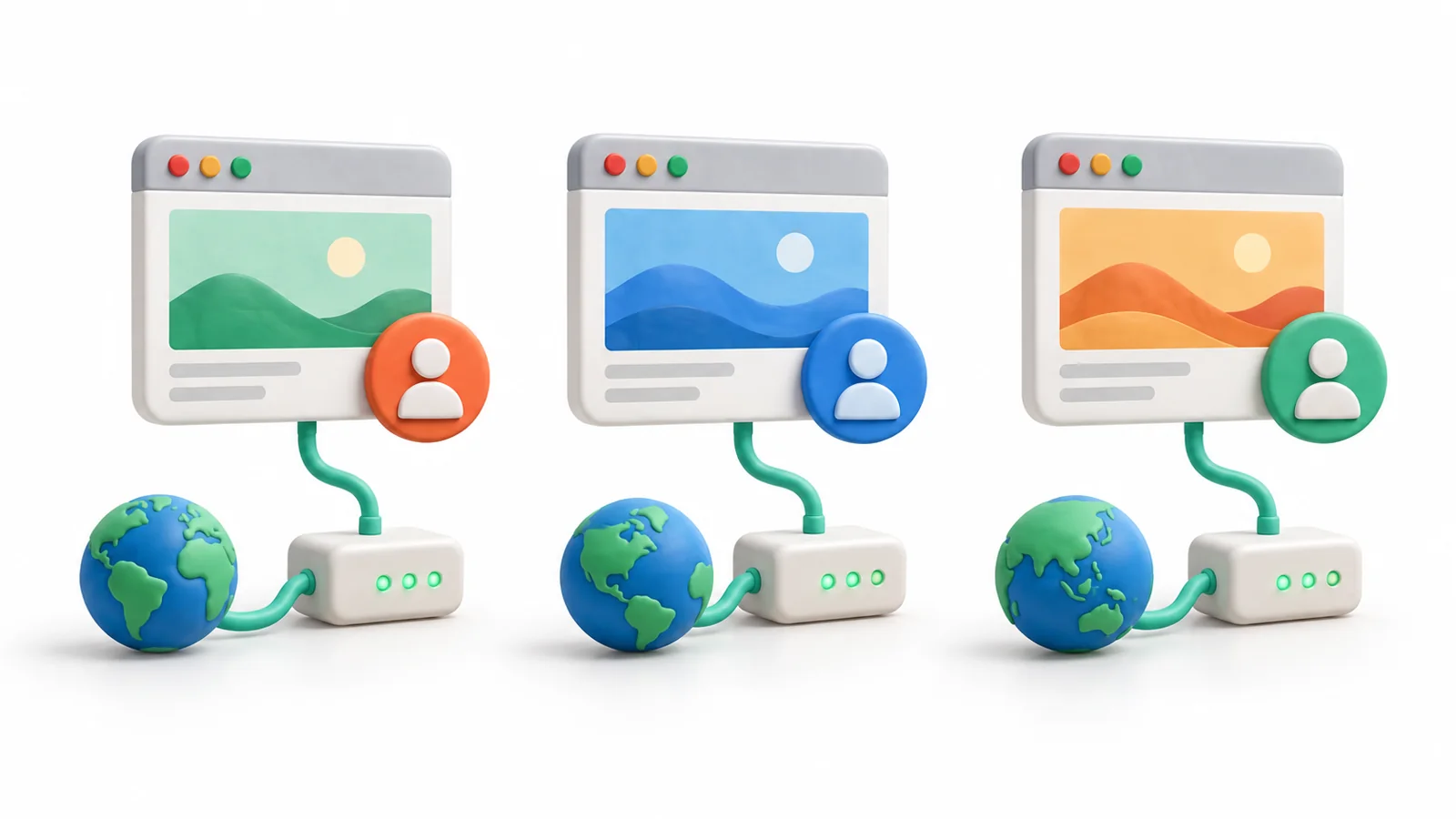

Amazon Scraper API vs Proxy: Choose a Product Data Source
Compare seller APIs, licensed Amazon product data and proxy page checks by record, access scope and reuse rights.
Read guide
BeautifulSoup is a Python library for parsing HTML and XML documents, allowing developers to turn raw markup into a structured tree they can navigate, search…

BeautifulSoup is a Python library for parsing HTML and XML documents, allowing developers to turn raw markup into a structured tree they can navigate, search, and modify programmatically. It sits on top of underlying parsers like lxml or html5lib, providing a forgiving, high-level API that’s widely used for web scraping, quick data extraction, and automation workflows.
At its core, BeautifulSoup takes an HTML or XML string and builds a parse tree. Each tag becomes a Python object with attributes, children, and methods that make traversal and inspection straightforward.
You typically start by fetching a page with a tool like requests or a proxy-backed HTTP client, then pass the response body into BeautifulSoup:
from bs4 import BeautifulSoup

soup = BeautifulSoup(html_content, "lxml")
Here, "lxml" is the parser.
BeautifulSoup layers its API on top, so you can use methods like .find(), .find_all(), and CSS-like selectors to locate elements.
BeautifulSoup supports multiple parsers.
Using lxml emphasizes speed and performance, while html5lib focuses on correctness and flexibility with malformed markup.
The project itself describes this as a way to “trade speed for flexibility,” making the same BeautifulSoup code portable across parsing strategies.
Developers rely on BeautifulSoup for a small set of powerful primitives:
.parent, .children, .next_sibling, etc..find() and .find_all() with tag names, attribute filters, and callables..get_text() and string helpers.BeautifulSoup’s design emphasizes quick-turnaround work. The maintainer describes it as ideal for “quick-turnaround screen-scraping projects” that can save developers hours or days compared to manual parsing.
For modern data teams, BeautifulSoup is not the whole scraping stack. It’s the parsing layer, sitting behind a network layer that handles HTTP, proxies, retries, and localization.
Residential proxy providers such as ProxyLane give you access to millions of real IPs across up to 195 countries, with city, ZIP, ISP, and ASN targeting. BeautifulSoup gives you the tooling to reliably extract structured data from the HTML those IPs reach. Together, they form a durable pattern for:
In this proxy-backed world, BeautifulSoup becomes a cornerstone because it is:
This glossary entry supports the deeper workflow guide on BeautifulSoup and proxies: BeautifulSoup Python scraping patterns that pair well with residential proxies.
BeautifulSoup is often confused with other tools in the scraping and automation space. Understanding what it is not helps you pick the right stack.
Playwright is a browser automation framework. It drives real browsers (Chromium, Firefox, WebKit), executes JavaScript, maintains sessions, and interacts with pages like a human user.
BeautifulSoup, by contrast:
You use Playwright when you need to log in, click buttons, scroll, wait for async content, or render complex SPAs.
You use BeautifulSoup when you already have the HTML (from Playwright, requests, or a proxy-backed client) and need to extract data.
In practice, many teams combine them: Playwright or another HTTP client fetches pages via residential proxies; BeautifulSoup parses the results into structured records.
lxml and Other Parserslxml is a fast, lower-level XML/HTML library; html5lib is a pure-Python parser that aims for HTML5 correctness.
BeautifulSoup sits on top of them, providing a more forgiving interface.
You can use lxml directly for high-performance parsing, but BeautifulSoup simplifies everyday tasks like “find the product title and price,” especially on messy pages.
It’s ideal for teams who prioritize developer time and maintainability over absolute parsing speed.
Frameworks like Scrapy bundle fetching, proxy management, scheduling, and item pipelines. BeautifulSoup is just one possible parser you can plug into these workflows.
In a ProxyLane-style stack, BeautifulSoup often appears in:
To make BeautifulSoup’s role concrete, consider a simple ecommerce intelligence task. You want to collect product title and price for the same SKU across multiple country sites, using residential proxies for accurate localization and BeautifulSoup for parsing.
Assume you have a ProxyLane HTTP endpoint that supports country and city targeting, and non-expiring traffic priced per GB. Here’s a simplified Python example combining an HTTP client, proxies, and BeautifulSoup:
import requests
from bs4 import BeautifulSoup

PROXYLANE_ENDPOINT = "http://user:password@gateway.proxylane.dev:8000"

def fetch_product_html(url, country_code):
    # Example: route traffic through a country-specific residential proxy
    proxies = {
        "http": PROXYLANE_ENDPOINT + f"?country={country_code}",
        "https": PROXYLANE_ENDPOINT + f"?country={country_code}",
    }
    response = requests.get(url, proxies=proxies, timeout=15)
    response.raise_for_status()
    return response.text

def parse_product(html):
    soup = BeautifulSoup(html, "lxml")

    title_tag = soup.find("h1", class_="product-title")
    price_tag = soup.find("span", class_="product-price")

    title = title_tag.get_text(strip=True) if title_tag else None
    price = price_tag.get_text(strip=True) if price_tag else None

    return {
        "title": title,
        "price": price,
    }

if __name__ == "__main__":
    url = "https://example-shop.com/product/12345"
    for country in ["US", "DE", "FR"]:
        html = fetch_product_html(url, country_code=country)
        product = parse_product(html)
        print(country, product)
In this script:
fetch_product_html calls the target URL through a residential proxy gateway, parameterized by country_code.lxml parser.parse_product uses .find() to locate the title and price and returns a structured dictionary.The result is a simple, cost-aware pipeline: each gigabyte of proxy traffic yields a measurable number of successfully parsed product records, making it easy to reason about “cost per validated result.” BeautifulSoup stays focused on DOM interpretation, leaving networking, geo-targeting, and session behavior to the proxy and HTTP layers.
This same pattern scales to more advanced cases. You can add:
For data teams working with AI-driven retrieval, enrichment, or ecommerce intelligence, BeautifulSoup is the dependable parser that turns proxy-backed traffic into structured, analysable web data. You can explore production-ready residential proxy options and integration patterns at proxylane.dev.
 ProxyLaneTraffic never expires
Scale your workflows with the tools you already use. Rotating or sticky sessions up to 72 hours.
Compare seller APIs, licensed Amazon product data and proxy page checks by record, access scope and reuse rights.
Read guideChoose the right anti-detect browser proxy guide, map the shared verification steps, and keep account access separate from the network route.
Read guideOur picks for market research: ProxyLane for small, intermittent projects, plus options for regional tracking, monthly collection and managed extraction.
Read guide